How to Learn Astrology: A Beginner's Guide to Your Birth Chart
New to astrology? This guide covers zodiac signs, planets, houses, and aspects — plus Sun, Moon, and Rising sign meanings for all 12 signs, with a free chart tool.
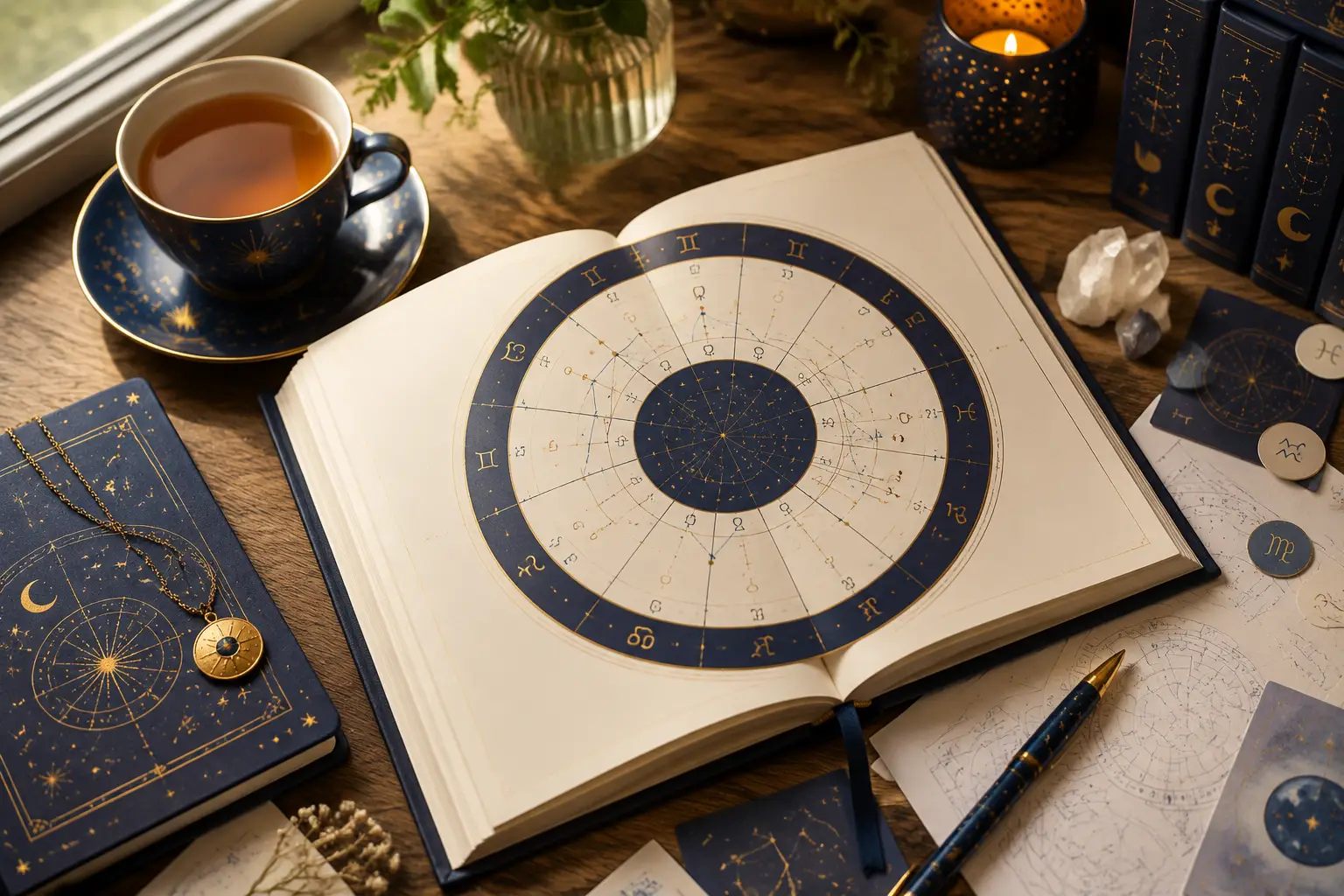
Learning astrology means understanding how zodiac signs, planets, houses, and aspects combine in your birth chart to reveal your personality, relationships, timing, and life themes. This guide teaches you how to learn astrology step by step — from the core building blocks to reading your own Sun, Moon, and Rising signs, all 12 houses, and the aspects that connect them. This astrology for beginners guide uses AIFATE's free birth chart tool so you can generate your own chart and follow along as you learn.
What Is Astrology? A Clear Overview for Beginners
Astrology is a symbolic system that interprets the positions of celestial bodies at your birth to provide insights into personality, timing, and relationships. Learning astrology starts with understanding that it is a language of symbols, not a science of prediction — and that distinction shapes how you should approach studying it.
Astrology vs. Astronomy: What's the Difference?
Astronomy relies on empirical data and physical laws to study stars, planets, and space phenomena. Astrology, however, uses these celestial positions as a symbolic language to interpret human behavior and life patterns. Common horoscope columns focus mainly on the Sun sign, but a full birth chart considers dozens of factors — planets, houses, aspects, and points — for a complete picture. This is one of the first things beginners learning astrology need to understand: your daily horoscope is a tiny fraction of what your actual chart reveals.
What Astrology Can and Cannot Do
Astrology offers psychological and timing insights rather than strict predictions or fixed fate. It can highlight tendencies, strengths, and potential challenges, but it doesn't determine absolute outcomes. Understanding these limits early in your learning journey prevents fatalism and helps you use astrology practically — for self-reflection, timing decisions, and understanding relationships — rather than treating it as a crystal ball.
Astrology Basics: The Core Building Blocks You Need to Know
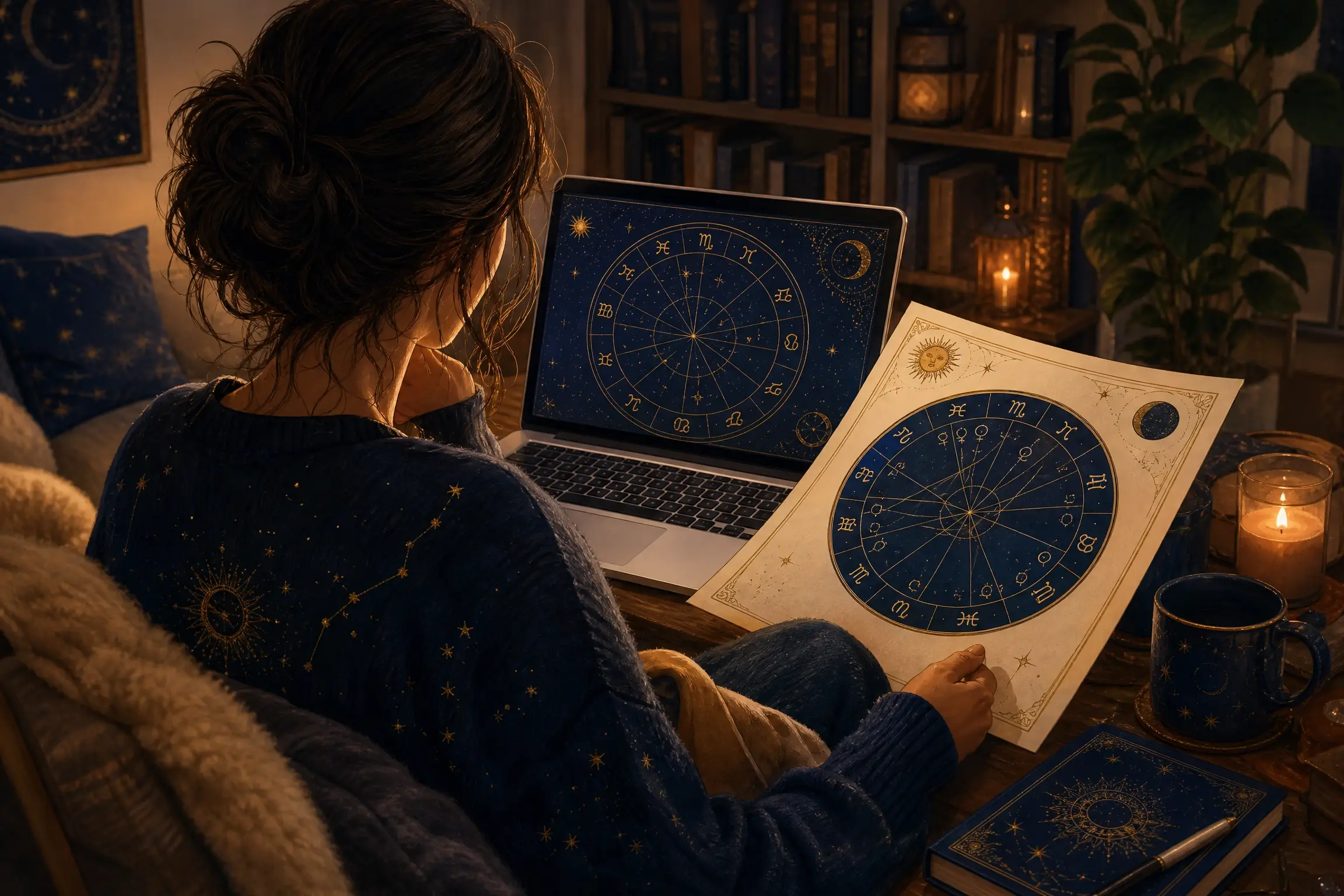
Astrology combines four main elements to form a birth chart: zodiac signs, planets, houses, and aspects. Learning astrology means learning how these four building blocks interact — each one plays a distinct role in defining personality traits and life areas.
Zodiac Signs and the Four Elements
The zodiac consists of 12 signs grouped by four elements and three modalities. The elements — Fire, Earth, Air, and Water — represent core energies: Fire signs (Aries, Leo, Sagittarius) are passionate and action-oriented; Earth signs (Taurus, Virgo, Capricorn) are practical and grounded; Air signs (Gemini, Libra, Aquarius) are intellectual and communicative; Water signs (Cancer, Scorpio, Pisces) are emotional and intuitive. The modalities — Cardinal, Fixed, and Mutable — describe how each sign expresses its energy: Cardinal signs initiate, Fixed signs sustain, and Mutable signs adapt.
The Planets and What They Represent
Planets symbolize different facets of personality and life experience. The personal planets — Sun, Moon, Mercury, Venus, and Mars — reflect your inner drives and everyday behavior, and they move quickly through the zodiac, changing signs every few weeks. The social planets, Jupiter and Saturn, represent growth and structure and move more slowly. The outer planets — Uranus, Neptune, and Pluto — move very slowly and influence generational trends and deep, long-term transformation rather than individual personality quirks.
The 12 Houses and Their Life Areas
Houses divide your chart into 12 areas of life, such as self-identity, finances, communication, home, relationships, career, and more. Unlike signs and planets, which are the same for everyone born on a given date, houses are calculated from your exact birth time and location — this is why an accurate birth time matters so much when learning to read your own chart. The sign and any planets in each house color that particular life domain with their own symbolic meaning.
Common Aspects and Their Interpretations
Aspects measure the angular relationships between planets in your chart, shaping the dynamics of harmony or tension between different parts of your personality. The five most important aspects for beginners are conjunction, opposition, square, trine, and sextile — each one changes how two planetary energies blend, clash, or support each other.
| Category | Names | What It Represents |
|---|---|---|
| Elements | Fire (Aries, Leo, Sagittarius) | Passion, action, confidence |
| Earth (Taurus, Virgo, Capricorn) | Practicality, stability, groundedness | |
| Air (Gemini, Libra, Aquarius) | Intellect, communication, ideas | |
| Water (Cancer, Scorpio, Pisces) | Emotion, intuition, depth | |
| Planets | Sun | Core identity, vitality, ego |
| Moon | Emotions, instincts, inner needs | |
| Mercury | Communication, thinking, learning | |
| Venus | Love, beauty, values, harmony | |
| Mars | Drive, action, desire, assertiveness | |
| Jupiter | Growth, luck, expansion, optimism | |
| Saturn | Discipline, structure, limits, lessons | |
| Uranus | Change, rebellion, innovation | |
| Neptune | Dreams, intuition, spirituality, illusion | |
| Pluto | Power, transformation, rebirth | |
| Aspects | Conjunction (0°) | Intensifies and merges energy |
| Square (90°) | Tension, challenge, growth through friction | |
| Trine (120°) | Ease, natural flow, talent | |
| Opposition (180°) | Polarity, balance, awareness through contrast |
How to Get Your Free Natal Chart Step by Step
Before you can practice reading a chart, you need an accurate one. Here is exactly how to generate and orient yourself to your birth chart.
| Step | Task | Tips |
|---|---|---|
| 1 | Gather your birth data | You need your exact birth date, time, and location. Precise birth time is essential for calculating your Ascendant and house placements accurately. |
| 2 | Generate your chart | Use AIFATE's free birth chart tool to enter your birth information and generate your personalized natal chart instantly. |
| 3 | Orient yourself to the wheel | The chart is divided into 12 segments (houses). Zodiac signs run along the outer wheel, and planets are plotted inside at the degree of their position. |
| 4 | Find your Ascendant | The left side of the chart marks the eastern horizon at your birth moment — this is your Rising sign, or Ascendant. |
| 5 | Locate your Sun and Moon | Find the Sun and Moon symbols and note which zodiac sign and house they fall in. These, together with your Ascendant, form your "Big Three." |
| 6 | Identify remaining planets | Work outward from the Big Three to Mercury, Venus, and Mars, then the slower-moving outer planets. |
You can generate your astrology chart with AIFATE to follow this process step by step and begin studying your own chart layout today.
Your Big Three: Sun, Moon, and Rising Sign Meanings
The fastest way to start learning astrology is to focus on your "Big Three" — your Sun sign, Moon sign, and Rising sign (Ascendant). Together they paint a foundational picture of your conscious identity, emotional nature, and outward personality. Below is a quick-reference guide to what each placement means across all 12 zodiac signs.
Sun Sign Meanings by Zodiac Sign
Your Sun sign reflects your core identity, ego, and the type of self-expression you're here to develop. It's the sign most people mean when they say "I'm a Leo" or "I'm a Scorpio."
Many people who explore astrology also connect their zodiac signs with the symbolic meanings of gemstones. Each crystal has its own history, appearance, and traditional associations, making zodiac crystals a popular choice for those who want to combine astrology with personal jewelry. Learning about crystal meanings can help people discover stones that feel connected to their birth sign, personality, or spiritual interests.
Sun in Aries: Bold, independent, and driven by a need to lead and initiate. Aries Suns thrive on challenge and new beginnings.
Sun in Taurus: Steady, sensual, and value-driven. Taurus Suns build their identity around stability, comfort, and reliability.
Sun in Gemini: Curious, communicative, and adaptable. Gemini Suns express themselves through ideas, conversation, and variety.
Sun in Cancer: Nurturing, protective, and emotionally attuned. Cancer Suns build identity around home, family, and emotional security.
Sun in Leo: Confident, expressive, and generous. Leo Suns need recognition and creative self-expression to feel like themselves.
Sun in Virgo: Analytical, practical, and service-oriented. Virgo Suns find identity through improvement, precision, and being useful.
Sun in Libra: Diplomatic, relationship-focused, and aesthetically minded. Libra Suns define themselves through partnership and harmony.
Sun in Scorpio: Intense, private, and transformative. Scorpio Suns are drawn to depth, truth, and psychological insight.
Sun in Sagittarius: Adventurous, philosophical, and freedom-loving. Sagittarius Suns build identity through exploration and belief.
Sun in Capricorn: Ambitious, disciplined, and achievement-oriented. Capricorn Suns express identity through mastery and long-term goals.
Sun in Aquarius: Independent, innovative, and community-minded. Aquarius Suns identify with being different and forward-thinking.
Sun in Pisces: Compassionate, imaginative, and spiritually attuned. Pisces Suns build identity through empathy, creativity, and intuition.
Moon Sign Meanings by Zodiac Sign
Your Moon sign governs your emotions, instincts, and subconscious needs — how you process feelings and what makes you feel safe. It's often considered the most important placement after the Sun for understanding a person's inner world.
Moon in Aries: Emotionally quick and reactive, needing independence and direct emotional expression.
Moon in Taurus: Emotionally steady, needing physical comfort, routine, and security to feel calm.
Moon in Gemini: Processes emotions through talking and thinking, needing mental stimulation and variety.
Moon in Cancer: Deeply emotional and nurturing, needing home, family, and a sense of belonging.
Moon in Leo: Emotionally expressive and warm, needing appreciation, affection, and creative outlets.
Moon in Virgo: Processes emotions through order and usefulness, needing routine and practical control.
Moon in Libra: Emotionally attuned to relationships, needing harmony, fairness, and partnership.
Moon in Scorpio: Intensely emotional and private, needing deep trust and emotional honesty.
Moon in Sagittarius: Emotionally optimistic and restless, needing freedom, humor, and philosophical meaning.
Moon in Capricorn: Emotionally reserved and self-reliant, needing structure and a sense of accomplishment.
Moon in Aquarius: Emotionally detached and analytical, needing space, individuality, and intellectual connection.
Moon in Pisces: Deeply empathetic and sensitive, needing solitude, creativity, and spiritual connection.
Rising Sign (Ascendant) Meanings by Zodiac Sign
Your Rising sign, or Ascendant, is the zodiac sign that was on the eastern horizon at the exact moment you were born. It shapes your outward personality, first impressions, and physical presentation — often described as the "mask" you show the world.
Rising in Aries: Comes across as energetic, direct, and confident on first meeting.
Rising in Taurus: Comes across as calm, grounded, and pleasantly steady.
Rising in Gemini: Comes across as talkative, quick-witted, and socially engaging.
Rising in Cancer: Comes across as warm, gentle, and protective, sometimes shy at first.
Rising in Leo: Comes across as confident, warm, and naturally charismatic.
Rising in Virgo: Comes across as polished, observant, and modest.
Rising in Libra: Comes across as charming, diplomatic, and socially graceful.
Rising in Scorpio: Comes across as intense, magnetic, and hard to read.
Rising in Sagittarius: Comes across as friendly, adventurous, and easygoing.
Rising in Capricorn: Comes across as serious, composed, and quietly authoritative.
Rising in Aquarius: Comes across as unconventional, friendly, and independent-minded.
Rising in Pisces: Comes across as dreamy, gentle, and easily approachable.
Identifying Key Planets and Their Roles
After your Big Three, look at Venus, Mars, and Mercury for relationship style, drive, and communication methods. For example, Venus in Cancer may show nurturing, protective love, while Mars in Aries indicates assertive, fast-moving energy. Practicing with these three planets is the natural next step once you're comfortable identifying your Sun, Moon, and Rising signs.
Want a deeper dive into how Venus specifically shapes love, beauty, and money in your chart? Read AIFATE's guide to Venus in your birth chart for a full sign-by-sign breakdown.
The 12 Houses in Your Birth Chart Explained
Once you understand signs and planets, the next layer of learning astrology is the houses — the 12 life areas that planets and signs activate. Here is a complete breakdown of what each house governs.
1st House: Self and Identity
The 1st house rules your physical appearance, personality, and how you present yourself to the world. It's ruled by your Ascendant and sets the tone for your entire chart.
2nd House: Money and Values
The 2nd house governs personal finances, possessions, and self-worth. Planets here shape your relationship with money and what you consider valuable in life.
3rd House: Communication and Learning
The 3rd house rules communication style, everyday thinking, short trips, and siblings. It's the house of how you learn, talk, and process information.
4th House: Home and Roots
The 4th house represents home, family, emotional foundations, and your private inner world. It's considered the most intimate house in the entire chart.
5th House: Creativity and Romance
The 5th house governs romance, creative self-expression, pleasure, and children. It's the house of joy, play, and what makes life feel worth living.
6th House: Work and Health
The 6th house rules daily routines, work habits, and physical health. It shapes how you organize your everyday life and take care of your body.
7th House: Partnerships and Marriage
The 7th house governs committed relationships, marriage, and business partnerships. It reflects what you seek in a significant other and how you show up in one-on-one bonds.
8th House: Transformation and Shared Resources
The 8th house rules intimacy, shared finances, and deep psychological transformation. It's associated with sexuality, inheritance, and profound personal change.
9th House: Philosophy and Travel
The 9th house governs higher education, foreign travel, religion, and the search for meaning. It represents how you expand your worldview.
10th House: Career and Public Life
The 10th house rules career, reputation, and life direction. It shows how the world sees you and what you're working to achieve publicly.
11th House: Friendship and Hopes
The 11th house governs friendships, social groups, and long-term goals. It reflects your community and the causes you care about.
12th House: Subconscious and Endings
The 12th house rules the unconscious mind, spirituality, and hidden matters. It's associated with solitude, closure, and what lies beneath conscious awareness.
For a deeper, house-by-house breakdown with real chart examples, see AIFATE's comparison of the top free birth chart calculators, which includes tools for exploring house placements in detail.
Common Aspects and How to Interpret Them
Check major aspects like squares or trines between your Sun, Moon, and planets. These reveal internal tensions or smoother flows shaping your personality and challenges — and understanding them is one of the more advanced skills in learning astrology.
Conjunction: Merged Energy
A conjunction occurs when two planets sit close together in the same sign. Their energies blend and intensify each other, for better or worse depending on the planets involved.
Square: Productive Tension
A square is a 90-degree angle between planets that creates friction and challenge. Squares often point to the areas where you grow the most through effort and conscious work.
Trine: Natural Flow
A trine is a 120-degree angle that creates ease and natural talent between two planets. Trines represent gifts, though they can sometimes lead to complacency if left undeveloped.
Opposition: Balance Through Awareness
An opposition is a 180-degree angle that creates polarity between two planets. It often shows up as an internal tug-of-war that requires conscious balancing between two needs.
Sextile: Supportive Opportunity
A sextile is a 60-degree angle that offers gentle support and opportunity between two planets, requiring a bit of effort to activate but rewarding when engaged.
Try a practice exercise by comparing these aspect types to your own chart. AIFATE's synastry tool also lets you see how aspects work between two different people's charts — a natural next step once you understand aspects within a single chart. Try AIFATE's synastry chart tool to explore this further.
Beginner Astrology Learning Roadmap and Applying Astrology to Everyday Life
Learning astrology develops in stages, starting with basic chart components and progressing to nuanced relationship and timing interpretations. Here's a realistic roadmap for how to learn astrology from complete beginner to confident chart reader.
| Timeframe | Focus | What to Do |
|---|---|---|
| Week 1–2 | Learn the basics | Understand zodiac signs, elements, modalities, and the 10 planets. Generate your own chart with AIFATE's free birth chart tool. |
| Week 3–4 | Master your Big Three | Identify and study your Sun, Moon, and Rising signs in depth. Read charts of friends and family to practice. |
| Month 2 | Learn the 12 houses | Practice identifying which houses your planets fall in and what life areas they activate. |
| Month 3 | Learn aspects | Study conjunctions, squares, trines, oppositions, and sextiles between your planets. |
| Month 4+ | Study synastry and relationships | Explore how two charts interact using AIFATE's synastry chart tool. |
| Ongoing | Track timing with transits | Follow current planetary influences using the transit chart tool and explore yearly solar return charts. |
Astrology supports decision-making in relationships, career planning, and self-awareness rather than predicting fixed outcomes. Observing planetary cycles and chart patterns in your life over time provides useful timing insight without turning into fatalism. You can also deepen your understanding with numerology, which adds another symbolic layer to your self-knowledge — try AIFATE's numerology calculator to explore your Life Path Number alongside your birth chart.
For next steps in your learning journey, read AIFATE's in-depth guide to the four astrology elements and modalities to deepen your understanding of zodiac signs.
Common Beginner Questions and Mistakes
What is the difference between a Sun sign and a Rising sign?
The Sun sign reflects your core identity, while the Rising sign (Ascendant) describes your outward behavior and the first impression you give others. Both are important for a balanced chart reading, and beginners often confuse the two because popular horoscopes only mention the Sun sign.
Can I rely only on my Sun sign for understanding astrology?
Your Sun sign is just one piece of your chart. Including your Moon, Rising, other planets, and houses provides a fuller picture and avoids the oversimplified interpretations common in daily horoscope columns.
How important is exact birth time?
Exact birth time significantly impacts your Ascendant and house positions. Even a few minutes' difference can shift your Rising sign or move a planet into a different house, so it's worth trying to find your most accurate birth time possible — check your birth certificate or ask family members if you're unsure.
What if I don't relate to my Sun sign traits?
Personality is complex and shaped by many chart factors, not just the Sun. Your Moon, Rising sign, and planetary aspects can modify, balance, or even seem to contradict your Sun sign traits — this is normal and part of what makes each chart unique.
How can astrology help with relationships?
Comparing your planets with another person's chart — a technique called synastry — highlights compatibility areas and potential challenges. This offers far more practical insight than simple Sun sign compatibility charts.
Is astrology able to predict life events?
Astrology provides probable timing windows through transits and progressions, but it does not guarantee certainty. It's best used to guide awareness and preparation rather than to predict fixed, unavoidable outcomes.
What's the best way to practice learning astrology?
Use free tools like AIFATE's chart calculators to generate your own chart and the charts of people you know. Start with basic interpretations of your Big Three, then gradually incorporate houses, aspects, and eventually synastry as your confidence grows.
Can numerology complement astrology?
Yes. Numerology adds another symbolic layer of insight into life themes, personality, and timing. AIFATE offers integrated numerology tools so you can explore both systems side by side as you continue learning.
Author

Lead Astrologer at AIFATE
Maya Rivers is the lead astrologer at AIFATE, where she bridges Western and Vedic astrology with practical numerology. With over a decade of birth chart interpretation experience and thousands of personal readings, she writes to help readers turn planetary language into everyday clarity.
Previous
Synastry House Overlays: What They Mean for Your Relationship (All 12 Houses)
Next
Jupiter Sign Meaning in Astrology: Luck, Growth and Expansion