Free Astrology Birth Chart - Discover Your Cosmic Blueprint
Unlock your free astrology birth chart and decode your personality, strengths, and life path. Generate your natal chart now with accurate planetary positions.

Understanding Your Astrology Birth Chart: A Beginner's Guide
An astrology birth chart is a personalized map of where every planet, the Sun, and the Moon were located at the exact moment you were born. It captures the sky as a two-dimensional wheel and serves as a permanent cosmic fingerprint. While daily horoscopes often refer only to your Sun sign, a birth chart goes far deeper, revealing how planetary energies blend to shape your personality, emotions, communication style, and even your life patterns. At AI‑FATE we see the birth chart as a foundation for self-inquiry rather than a fixed fortune. Understanding its structure helps you move beyond generalizations and into a more authentic relationship with astrology.
Introduction to Astrology Birth Chart
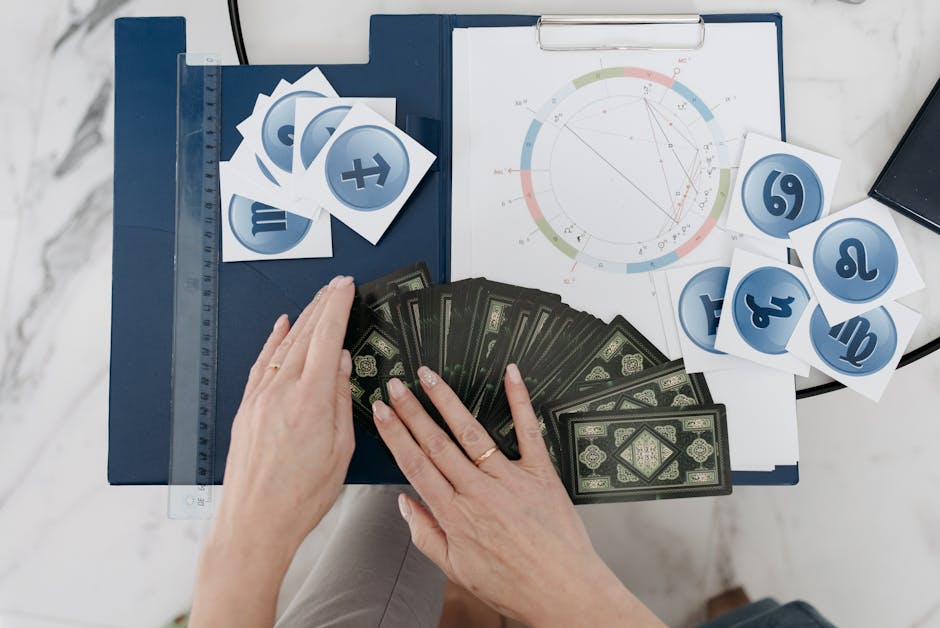
Every astrology birth chart is built on three pieces of data: your date of birth, your time of birth, and the place you were born. Even a few minutes can shift the angles of the chart, which is why an exact birth time matters so much. The result is a circular diagram split into twelve sections called houses, with symbols representing the planets, the Sun, and the Moon scattered across zodiac signs. Unlike a basic horoscope column that only needs your Sun sign, a full birth chart cannot be summarized in a single sentence. It describes strengths you may not recognize yet, tensions you know well, and areas where growth is most likely to happen.
Many people first encounter astrology through Sun sign descriptions, but they often sense that something is missing. The Sun is important, yet it is only one character in a much larger story. The Moon represents your emotional rhythm, Mercury explains how you think and speak, Venus colors what you value, and Mars describes how you act. When you look at a complete astrology birth chart, you begin to see why two people born under the same Sun sign can be so different. Every planet lands in a sign, occupies a house, and talks to other planets through aspects. This layered interplay is what makes chart interpretation both rich and deeply personal. After you become comfortable with a natal chart, you might explore transit chart movements that trigger real-world changes, or even dive into a Vedic birth chart for a parallel perspective rooted in sidereal calculations. Still, the Western natal chart remains the most accessible entry point for beginners.
How to Calculate Your Birth Chart
Calculating an accurate birth chart used to require complex math and printed ephemerides. Today, a birth chart calculator can produce a full wheel in seconds. The key is feeding it the right information. To get a reliable astrology birth chart, gather your birth date, the exact time from your birth certificate or a parent’s record, and the city of birth. Below are the steps to obtain a trustworthy chart, whether you use a free birth chart tool or a professional astrologer’s service.
- Find your official birth time. Check a birth certificate, baby book, or hospital record. If only a rough window is available, note the range so you can test minor time adjustments later.
- Note the precise location. Use the city and country as they stood when you were born. Large cities usually work, but if you were born in a small town, pick the nearest major town in the right time zone.
- Enter the data into a birth chart calculator. Reliable free platforms include Astro.com and Astro-Seek. Enter the date, time, and place exactly. Double-check the AM/PM designation and daylight saving time settings.
- Generate a round wheel chart. Avoid simplified tables that only list planets in signs. The wheel shows houses and aspects visually, which makes learning much easier.
- Save a copy or screenshot. Your astrology birth chart does not change, so keep a permanent version you can mark up as you study.
- If time is uncertain, get a chart rectification. Professional astrologers can work backward from key life events to estimate a likely birth time. This is a paid service, but it helps when no record exists.
Once you have the chart wheel, resist the urge to jump straight into full interpretation. First, note your rising sign on the left horizon of the wheel—this is the sign that was ascending at the moment of your birth. Your calculate birth chart step is now complete, and you can move on to understanding what each symbol on that wheel means. For those curious about relationship patterns, a synastry chart comparison uses two natal charts to reveal the dynamic between partners. The natal chart is always the true starting point for any advanced work.
Key Components: Planets, Signs, Houses, and Aspects
An astrology birth chart rests on four pillars: planets in astrology, zodiac signs, astrology houses, and aspects in astrology. Together they form a syntax. Planets are the “what” of the story—the drives and energies at play. Signs are the “how”—the style and quality those energies take on. Houses are the “where”—the life areas where the action unfolds. Aspects are the conversations between planets, revealing ease or friction. Understanding these birth chart components takes time, but starting with clear definitions makes the process less intimidating.
The following table breaks down each component and its role in chart interpretation. Use it as a quick reference while you practice reading your own chart.
| Component | What It Represents | Example | Why It Matters |
|---|---|---|---|
| Planets | Core psychological drives and functions (Sun: identity, Moon: emotions, Mercury: communication, Venus: love, Mars: action, Jupiter: expansion, Saturn: structure, and outer planets as generational themes). | Moon in Cancer | Planets are the actors in your chart. Their sign and house placement determine how and where their energy emerges. |
| Zodiac Signs | Twelve archetypal styles that color how a planet expresses itself. | Mercury in Gemini (quick, curious thinking) vs. Mercury in Taurus (steady, deliberate thinking). | Signs show the manner of expression. They modify planetary energy like a filter. |
| Houses | Twelve life areas where planetary energies play out (1st house: self and appearance, 4th: home and roots, 7th: partnerships, 10th: career and public image, etc.). | Mars in the 10th house | Houses give context. The same planet in the same sign feels different depending on whether it lands in the 1st house or the 12th house. |
| Aspects | Geometric angles between planets that show relationships. Major aspects include conjunction (0°), sextile (60°), square (90°), trine (120°), and opposition (180°). | Venus square Saturn | Aspects reveal inner dialogues. A square suggests tension that can be productive; a trine points to flowing ease. |
When first examining your astrology birth chart, start by listing your Sun, Moon, and rising sign. Then notice which houses contain the most planets. A crowded seventh house, for example, often signals that relationships will be a central theme, regardless of Sun sign. Aspects add a final layer: a Venus‑Jupiter trine feels very different from a Mercury‑Saturn opposition. The goal is not to memorize every combination but to see patterns. If you also have an interest in numbers, a numerology profile can complement chart themes by adding another symbolic language to your self-discovery toolkit.
Step-by-Step Guide to Reading a Birth Chart
Learning how to read birth chart wheels can feel like learning a new language, but breaking it down into manageable steps builds confidence. This astrology birth chart guide focuses on the foundational pieces of birth chart interpretation: the rising sign, the key luminaries, the personal planets, and the major aspect patterns. Take your time with each step, and keep your own chart open as you go.
- Start with the rising sign (Ascendant). Find the line on the left side of the wheel labeled AC. The zodiac sign there is your rising sign. It describes your outward style, your initial reactions, and how others perceive you at first meeting. Read about the element (Earth, Air, Fire, Water) and modality of that sign to grasp the lens through which you approach new experiences.
- Locate the Sun and Moon. The Sun reveals your conscious identity and life purpose; the Moon shows your emotional needs and private self. Note their signs and houses. A Sun in the 4th house differs greatly from a Sun in the 10th. If the Sun and Moon are in compatible elements, the inner life tends toward harmony; if they are in challenging aspect, there is a creative tension worth exploring.
- Examine Mercury, Venus, and Mars. These personal planets fill in the texture of daily life. Mercury describes thinking and communication style. Venus shows what you value and how you relate. Mars speaks to desire and drive. Check the sign of each and, more importantly, the house. Mars in the 3rd house often indicates a direct, assertive communication style, while Mars in the 12th may point to hidden drives.
- Look at the Moon’s nodes. The North Node and South Node appear as horseshoe-like symbols. The South Node suggests ingrained patterns and comfort zones; the North Node points toward growth edges. Their house positions highlight a life-area shift from innate familiarity toward conscious development.
- Identify the strongest aspect patterns. Scan for stelliums (three or more planets in one sign or house), T‑squares, and grand trines. A stellium creates a concentrated theme. A T‑square signals dynamic pressure that can become a major motivator. A grand trine indicates a closed loop of easy flow in one element—often a talent that can be taken for granted.
- Bring the chart together with a theme. Choose three to five symbols that repeat or connect across signs, houses, and aspects. Perhaps water signs dominate, suggesting an emotionally attuned nature. Maybe a strong Saturn emphasis shows a person who grows through discipline. Write a single “headline” sentence that summarizes what the chart emphasizes.
When you feel grounded in the natal chart, other maps become easier to understand. You might compare your chart with a partner’s using a love chart or explore annual cycles through a solar return chart. Each layer adds detail, but the natal chart remains the master blueprint. Interpretation is a practice, not an exam. The more charts you study—starting with your own—the more the symbols become a fluent language.
Common Misconceptions and Tips for Beginners
Many birth chart myths persist simply because pop culture reduces astrology to a Sun‑sign stereotype. One of the most widespread birth chart misconceptions is that the Sun sign alone defines your entire personality. In reality, a person with a Pisces Sun, an Aries Moon, and a Capricorn rising will express a blend of sensitivities, boldness, and reserve that no single sign can capture. Another common belief is that challenging aspects are “bad.” A Mars‑Saturn square, for example, often slows down action, but it can also produce extraordinary endurance and mastery over time. The chart is a whole, not a collection of good and bad parts.
Practical astrology tips for beginners include resisting perfectionism and comparison. Your astrology birth chart is not a report card. If one source describes a placement as difficult and another describes it positively, remember that every symbol contains a spectrum of expression. Stick to a few trusted resources at first, and give yourself months—not days—to become familiar with the houses and aspects. It also helps to study the charts of people you know well, because real-life observation grounds theory in lived experience. A chart is a map, but you are the territory. And if you ever feel stuck, step back and revisit just one component, such as the Moon sign, until its meaning resonates rather than frustrates. AI‑FATE encourages a patient, reflective approach: the chart opens at the speed of your curiosity, not in a single reading.
Resources for Further Learning
Building confidence with an astrology birth chart is easier when you have reliable materials. Countless astrology resources exist, from classic birth chart books to interactive apps, and the best ones prioritize clarity over hype. Below is a short, curated list to help you continue beyond the beginner stage.
- The Only Astrology Book You’ll Ever Need by Joanna Martine Woolfolk. A thorough single volume that walks through planets, signs, houses, and aspects, with clear interpretations. It remains one of the most recommended birth chart books for self‑study.
- Astrology for Yourself by Douglas Bloch and Demetra George. A workbook‑style guide designed to teach you how to learn astrology by constructing and interpreting your own chart step by step. It transforms passive reading into an active practice.
- Astro.com (Astrodienst). The gold standard for free chart calculation and reliable introductory articles. Their interactive charts let you toggle between tropical and sidereal modes, including a Vedic birth chart option if you eventually wish to compare systems.
- The Astrology Podcast (Chris Brennan). Free, long‑form episodes that cover planets, houses, techniques, and historical context. Ideal for deepening your vocabulary and understanding the logic behind chart interpretation.
- TimePassages app. A beginner‑friendly mobile app that draws your birth chart instantly and provides bite‑sized explanations. The free version includes daily transits, which can gently introduce you to timing astrology.
- Study groups and online forums. Look for communities focused on learning rather than fortune‑telling. Discussing charts with other learners sharpens your eye and helps correct misunderstandings early.
Astrology is a lifelong study. Even experienced practitioners find new layers in the same chart over time. The resources above give you a solid launchpad. Return to your own astrology birth chart periodically, and you will likely notice that symbols you once overlooked suddenly speak clearly. With curiosity and patience, the chart becomes less a mystery and more a mirror.
Author

Lead Astrologer at AIFATE
Maya Rivers is the lead astrologer at AIFATE, where she bridges Western and Vedic astrology with practical numerology. With over a decade of birth chart interpretation experience and thousands of personal readings, she writes to help readers turn planetary language into everyday clarity.
Previous
Can Your Birth Chart Really Predict Marriage? Here's What the Stars Actually Say
Next
Natal Chart vs Birth Chart: Is There Really a Difference?